Brick and Stone Fireplace Limewashing in Kent

Typical cost in Kent

  • One brick or stone surround$700 – $2,500+

A sooty or dated surround can end up as a clean mineral finish. Limewash painting works on brick, stone and plaster fireplaces alike, and we do all three in Kent homes. The lime softens orange brick or a busy stone pattern while leaving the joints and texture that give a fireplace character.

We clean off the soot, mask the mantel and hearth, then test the color against the room. Call us about a fireplace in Kent, Des Moines, Covington, SeaTac, Auburn, Tukwila or Maple Valley.

Request a free quote

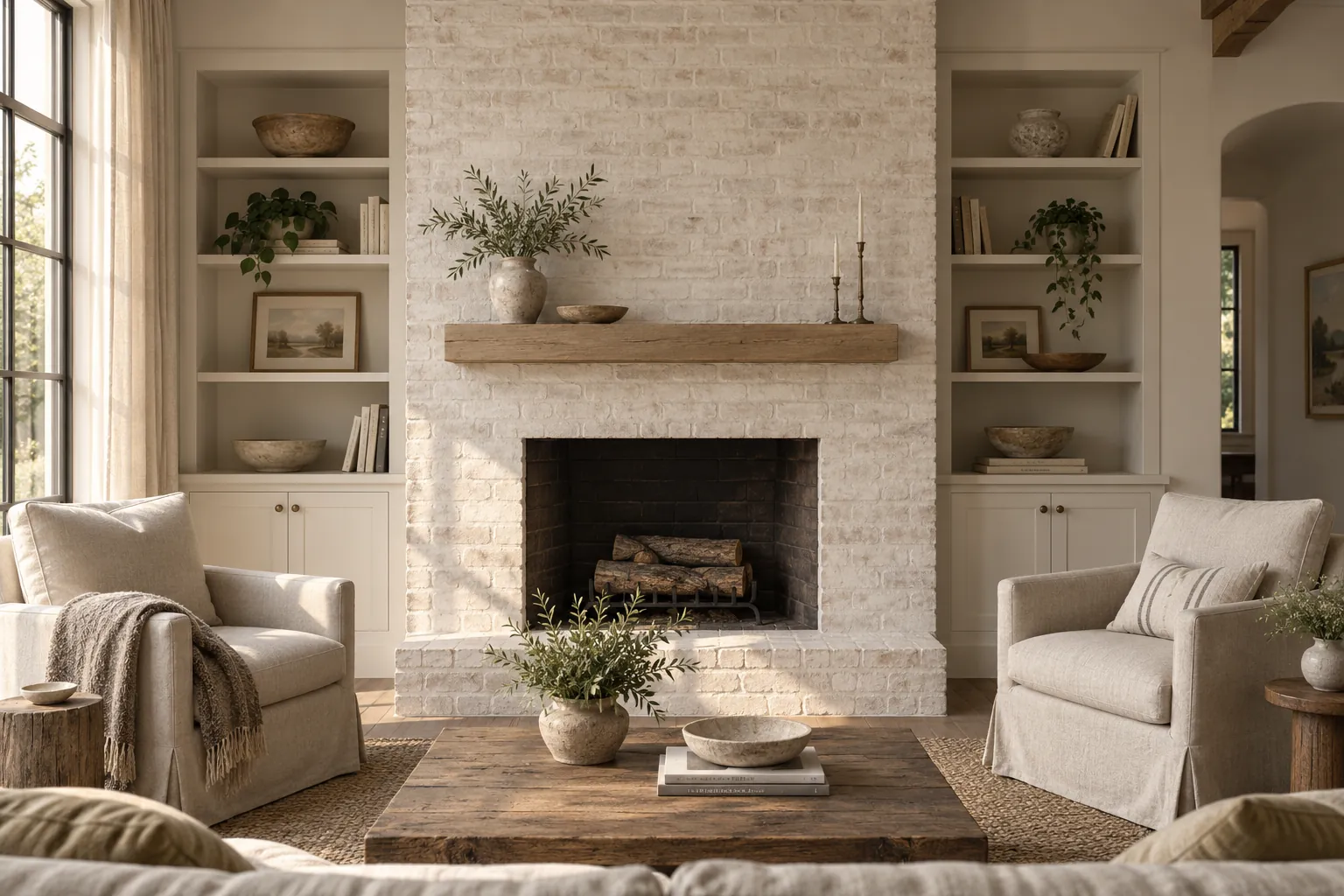
Living room brick fireplace limewashed in chalky warm white

Fireplace limewash options

Brick fireplaces

Unpainted brick needs only cleaning before lime. A first coat lifts the color; a second can push strong reds further back, and the joints remain clear throughout. Brushing each coat thinner or heavier controls how much of the old brick tone survives.
Stone and rock fireplaces

With river rock, stacked stone or fieldstone, a quick absorption test comes first, since smooth or sealed stone may not take lime. Porous stone draws it in, and the colors even out while every stone keeps its outline and shading.

Painted brick fireplaces

On an old painted fireplace, we clear the loose paint first. A product and primer made for painted surfaces then lets us limewash it. It ends up looking closer to lime on masonry than to paint, though with less of the brick-to-brick variation that bare brick shows.

Plaster and drywall surrounds

Drywall or plaster surrounds get a primer made for the limewash we use. After that, limewash gives them a minimal, plaster-like finish, with hand-worked edges and corners that make the whole surround look like one solid piece.

Full chimney breasts and built-ins

Extending the finish to the ceiling, or onto the flanking built-ins, turns the fireplace into the room’s feature wall. Treating the chimney breast as one surface also avoids a hard line where the brick stops and the wall above begins.

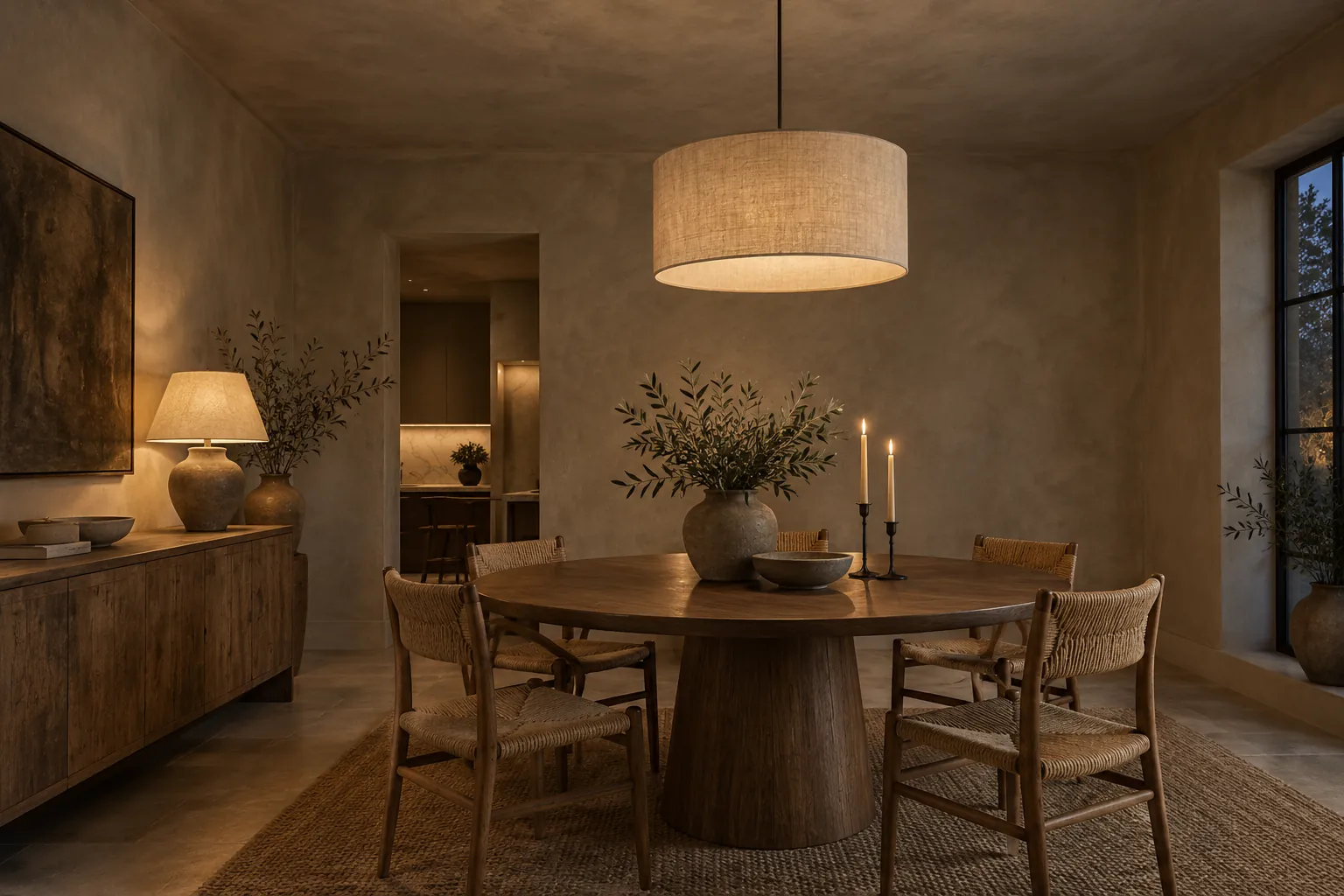
Dining room enveloped in warm mushroom limewash

Heat, soot and the firebox

Before any coat, we clean off soot and smoke stains, because limewash cannot hide grease or soot bleeding through. Then we brush lime onto the parts that face the room: the surround, the chimney breast and the front edge of the hearth. The inside of the firebox stays unfinished.

Heat and soot concentrate on the brick right at the opening, so that zone may need an occasional touch-up to keep the color even. Whatever the limewash manufacturer says about use near the opening holds for both wood-burning fireplaces and gas inserts.

Mantels, hearths and color

A wood mantel needs masking, or temporary removal, so it stays crisp against the new finish. On a raised hearth, the vertical front may be finished to match, but the top, where people sit or place things, needs a protective treatment the manufacturer approves or is better left as it is. Warm white, soft greige or pale clay usually suit a living room, and we judge them on boards propped up beside the floor and furniture.

Request a free limewash quote

Say what the surround is built from and whether paint has ever gone on it, then add the property address. We'll get back to you soon with an estimate or any questions we have. Estimates are free and there's no obligation.

Call (253) 867-9998

Call (253) 867-9998