Kent Limewash Painting · Services

Limewash Stone Walls and Chimneys in Kent, WA

Kent Limewash Painting brushes limewash over Kent, Washington stonework: veneer, fieldstone, chimneys, foundations and garden walls. Where the stone and its mortar are porous, lime pulls a mix of colors together without blurring the outline or shadow of any single stone.

Because stone varies so much, the work begins with an absorption test and a trial patch on the wall. Stone projects are taken on in Kent and in Des Moines, Covington, SeaTac, Auburn, Tukwila and Maple Valley.

Request a stone quote

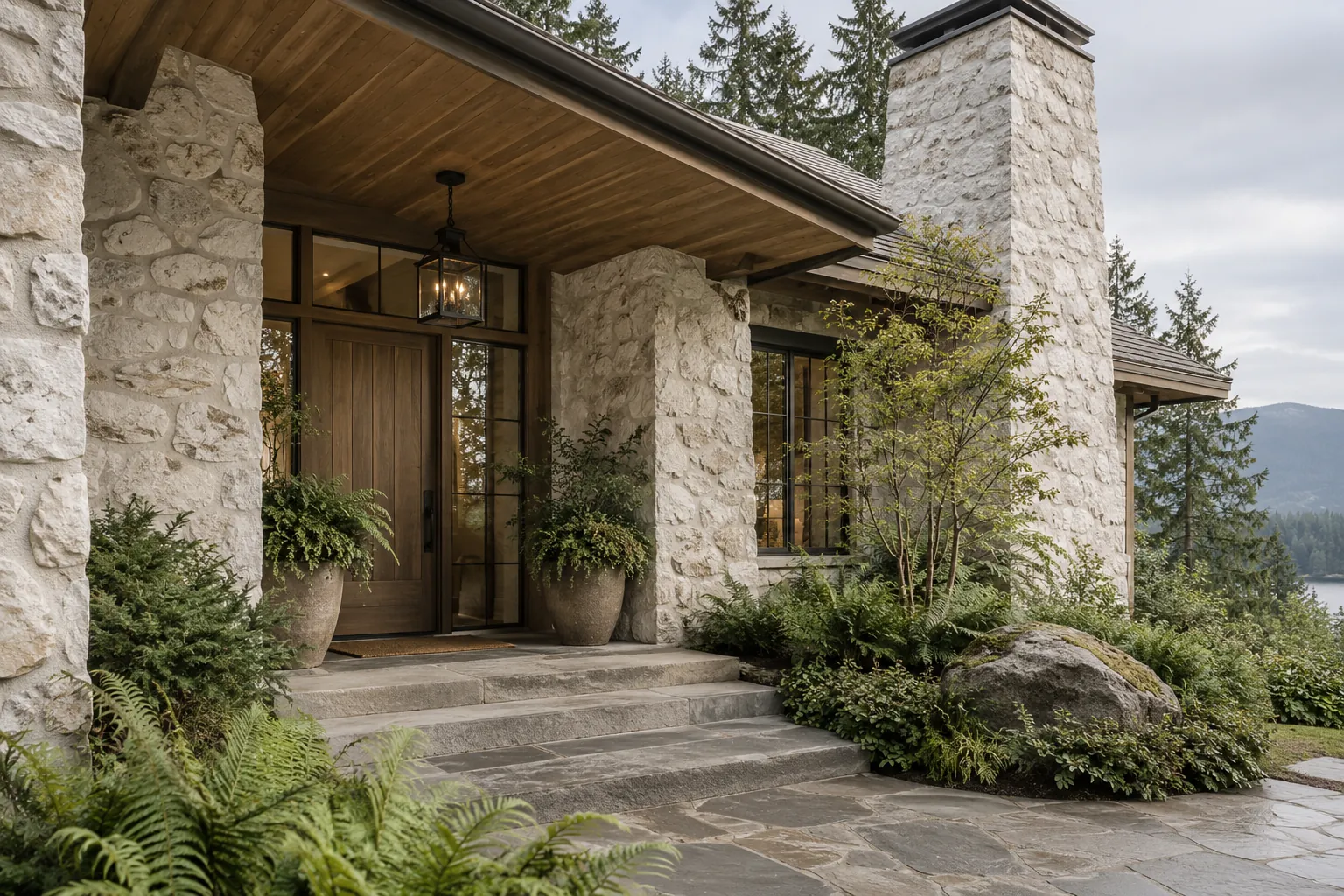
Fieldstone entrance and chimney limewashed in soft bone white

Stone limewash options

Stone house exteriors and veneer

The first question on a stone exterior is what kind of stone it is: natural stone and manufactured veneer behave differently, which shapes the product and coat plan. From there, entries, wainscots and whole facades can be limewashed to tone down dated color mixes or tie stone in with new siding.
Stone chimneys

Out in the weather, a stone chimney usually takes more wind and rain than any other part of the house. Its mortar, cap and flashing get looked at before anything else. After that, lime evens the chimney’s color while its rough surface still shows.

Stone foundations and plinths

Older rubble and stone foundations often carry decades of patches. Any below-grade moisture should be understood first. After that, limewash, a long-standing breathable masonry finish, pulls the patchwork into one color.

Garden walls, piers and outdoor stone

Garden walls, gateposts and retaining-wall faces get wet from both sides and the top, so copings and drainage deserve attention before the finish. Limewashed, they take on a softer, aged look that blends into planting.

Interior stone walls

Interior stone has no weather to contend with, but dense or sealed stone may need a different approach. Where it absorbs, limewash lightens feature walls and stone around kitchens or stairs to brighten the room.

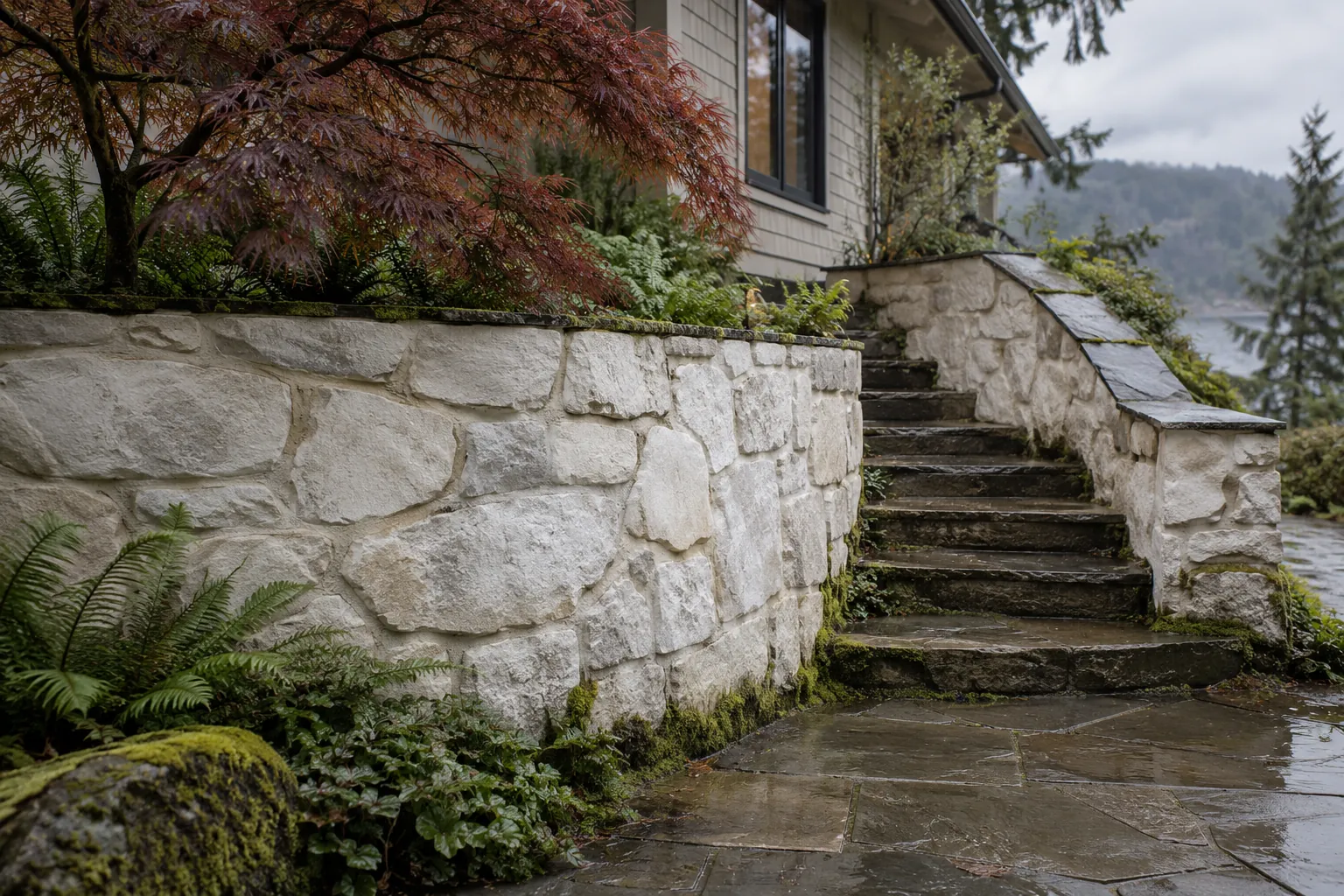
Fieldstone garden retaining wall limewashed in soft bone white

How much of the stone should show

Light wash

Minimal coverage means one thin layer, partially rinsed off where the product permits. Most of the stone’s natural color stays visible, and the job is mostly done once the loudest tones have quieted.

Even tone

Adding layers moves the stone toward one consistent pale shade, from bone to chalk to soft gray, while each stone’s shape still reads. How many layers depends on the product and the stone’s thirst for water, which a sample settles.

Mortar emphasis

A joint-first approach brushes lime deep into the mortar, then skims the stone faces more lightly. Depending on how heavy each pass is, the mortar pattern can become a feature or fade into the background.

Absorption, sealers and moisture

Absorption is the deciding condition. Granite, very dense stone and anything sealed in the past soak up little water, so lime may not bond. A few drops of water on several stones shows whether they absorb, and that check belongs before any finish is chosen.

A shaded wall that stays damp and mossy needs cleaning and enough time to dry before work. The underlying moisture source, whether gutters, grading or splashback, also needs fixing, otherwise the lime cannot let the wall dry out the way it should.

Request a stone limewash quote

Begin with the stone as it is: which walls or features, and any sealer you suspect is on them. Then the property address, plus a close-up and a wider photo if you have them.

Phone coming soon